A dull ache in your back that won’t go away, or a strange tingling sensation that travels down an arm or leg, is unsettling. One rare but possible cause is a spinal tumor. The hard part is that early spinal tumor symptoms can look and feel like common back problems at first. A sore spot that keeps you up at night, a shock-like pain when you cough, or a foot that tingles from time to time. These symptoms can develop for a variety of reasons, including a tumor that is putting pressure on the spinal cord and nerves in your back.
Spinal cord tumors are rare, with one extensive United States registry reporting an overall incidence of about 0.74 per 100,000 persons each year, and most were symptom-causing but non-cancerous. That rarity is exactly why getting the right diagnosis and treatment for removing the tumor and protecting spinal function is so important.
Read on to learn everything you need to know about spinal tumors, including how they are diagnosed and treated, and where to find the best spinal tumor surgeon in Los Angeles for effective treatment.
Four Types of Spinal Tumors
There are four main types of spinal tumors:
- Intradural tumors: Spinal tumors can grow either inside the spinal canal.
- Extradural tumors: Tumors that grow on the outside of the dura in the vertebrae or epidural space.
- Benign spinal tumors: Non-cancerous tumors that only need surgical removal
- Malignant spinal tumors: Cancerous spinal tumors that need removal and additional treatment like chemotherapy or radiation.
Even a small growth on the spine can press on the spinal cord or nearby nerve roots, which is why symptoms can range from slightly annoying to debilitating.
Common Spinal Tumor Symptoms
Spinal tumor symptoms often start in a way that feels easy to brush off, like:
- Back or neck pain that keeps coming back and slowly gets worse
- Numbness or tingling that spreads into an arm, hand, leg, or foot, similar to a pins-and-needles feeling
- Weaknesses in your hands, arms, or legs, including a weakening grip
- Changes in your balance
Symptoms vary depending on the location of your tumor. A tumor that presses on the spinal cord can cause myelopathy, which often affects strength, coordination, and walking. A tumor that presses on a single nerve root can cause radiculopathy, which more often creates sharp, traveling pain or tingling that follows a line down one arm or leg.
How are Spinal Tumors Diagnosed?
When a spinal tumor is on the list of possibilities, the first goal is to get a clear picture of what is happening:
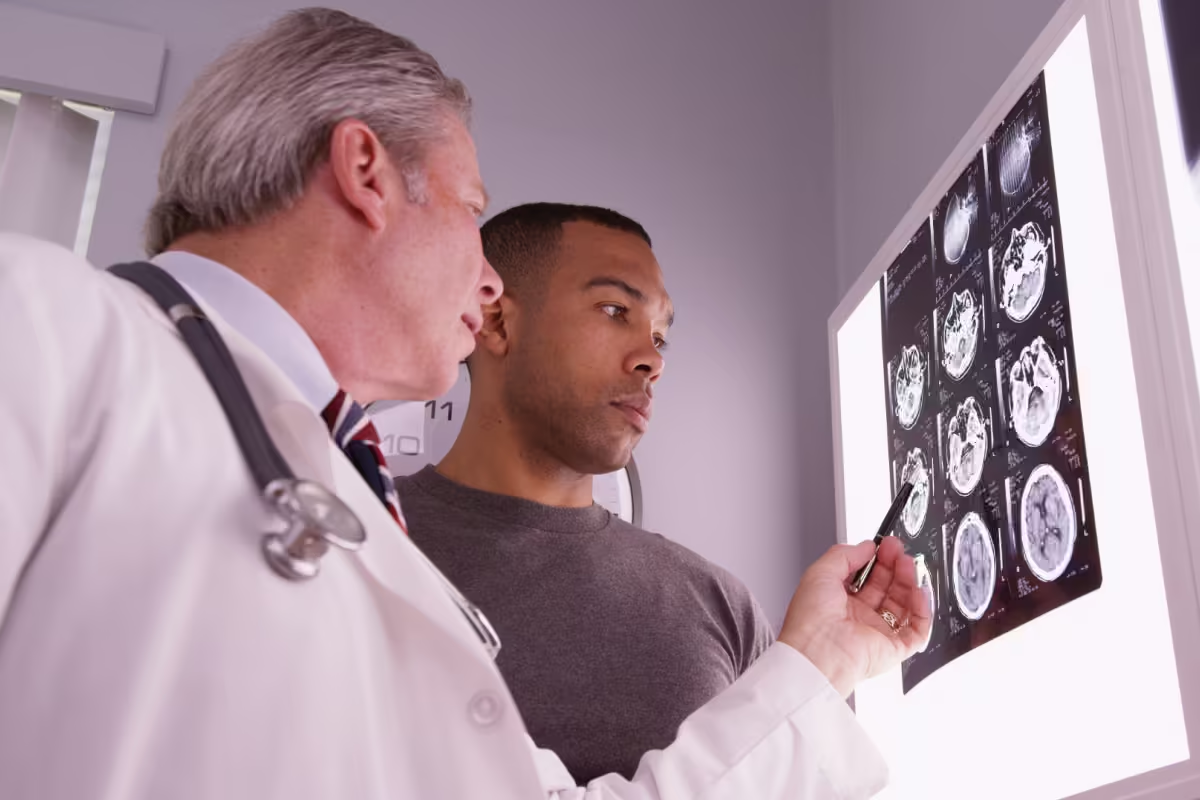
- An MRI is the first key test for most people. This test shows the spinal cord, nerve roots, and soft tissues in sharp detail. It is usually performed with and without contrast, which means you may first receive one set of images, then an IV dye that can make certain tumors stand out more clearly on the scan.
- A CT scan may also be necessary if you have an extradural tumor involving bone, since a CT scan can show bony details that an MRI may not highlight as well.
- A biopsy is recommended in some cases to confirm the tumor type. This is more common when imaging suggests the problem could be metastasis from another cancer or could even be infection, since treatment choices change depending on the cause.
Surgical Treatment Options for Intradural and Extradural Tumors of the Spine
Surgery for a spinal tumor is planned around two priorities: taking pressure off the spinal cord or nerves and keeping the spine stable enough to move safely afterward.
- For intradural tumors, the best neurosurgeon in Los Angeles carefully works inside the protective covering around the spinal cord using high magnification and fine instruments. The goal is to remove as much tumor as possible while carefully protecting the spinal cord and nerve roots that control strength, sensation, and balance.
- For extradural tumors, the problem may involve the vertebrae or the epidural space outside the dura. In this case, the surgery often focuses on decompression and stability. A spinal fusion may be necessary when stability is a concern, as the goal is to remove the mass and help your spine feel secure again when you stand, walk, and return to daily activities.
Recovery After Spinal Tumor Resection
Recovery after spinal tumor resection involves soreness, tight muscles, and incision care. In the first few days to a couple of weeks, it is common to experience pain that improves gradually, along with activity restrictions such as limits on bending, twisting, and lifting. Your timeline depends heavily on the extent of the surgery and whether a fusion was required. Some patients feel much more like themselves in about four to six weeks after a less extensive decompression.
Recovery after a spinal fusion can take months, as the bone needs time to heal and the body adjusts to the new stability. Even early on, your team typically encourages walking and gentle movement because short, frequent walks support circulation, breathing, and reduce stiffness. Physical therapy is often added gradually to rebuild strength, improve walking mechanics, and restore confidence in daily activities like climbing stairs or getting in and out of a car.
Discover the Best Neurosurgeon in Los Angeles for Spinal Tumors
The moment you hear the words spinal tumor, your mind can start racing with a hundred thoughts about treatment options, recovery, and what your future will look like. For calm and strategic guidance with precision treatment, patients across Los Angeles choose Dr. Benet
At California Neurosurgical Specialists, Dr. Benet takes time with every patient to connect the dots between symptoms, neurologic exam findings, and MRI details so the surgical plan is built around protecting what matters most: Recovering your strength, sensation, balance, and control.
Dr. Benet is known for meticulous microsurgical techniques and thoughtful decision-making when spinal tumors sit close to the spinal cord or wrap near delicate nerves. Making him known for being the best neurosurgeon in Los Angeles for spinal tumors and AVMs.
Ready to prioritize your health and future mobility with help from the best spinal tumor surgeon in Los Angeles?





.svg)


.svg)
.svg)