A brain tumor diagnosis can turn your world upside down. If you or someone you love has been told they have a meningioma, the first thing to know is that this diagnosis is often treatable. Meningioma is the most common primary brain tumor diagnosed in the United States, accounting for roughly 36% of all central nervous system tumors. And the overwhelming majority are benign, meaning they are not cancerous.
For many patients, surgery to remove the meningioma is the most effective path forward to a full recovery and a return to everyday life. Understanding what to expect before, during, and after meningioma removal surgery can help give you the clarity and reassurance you need right now.
Read on to get a detailed look at each stage of meningioma surgery, from the best brain meningioma surgeon in Los Angeles.
How to Prepare for Meningioma Surgery
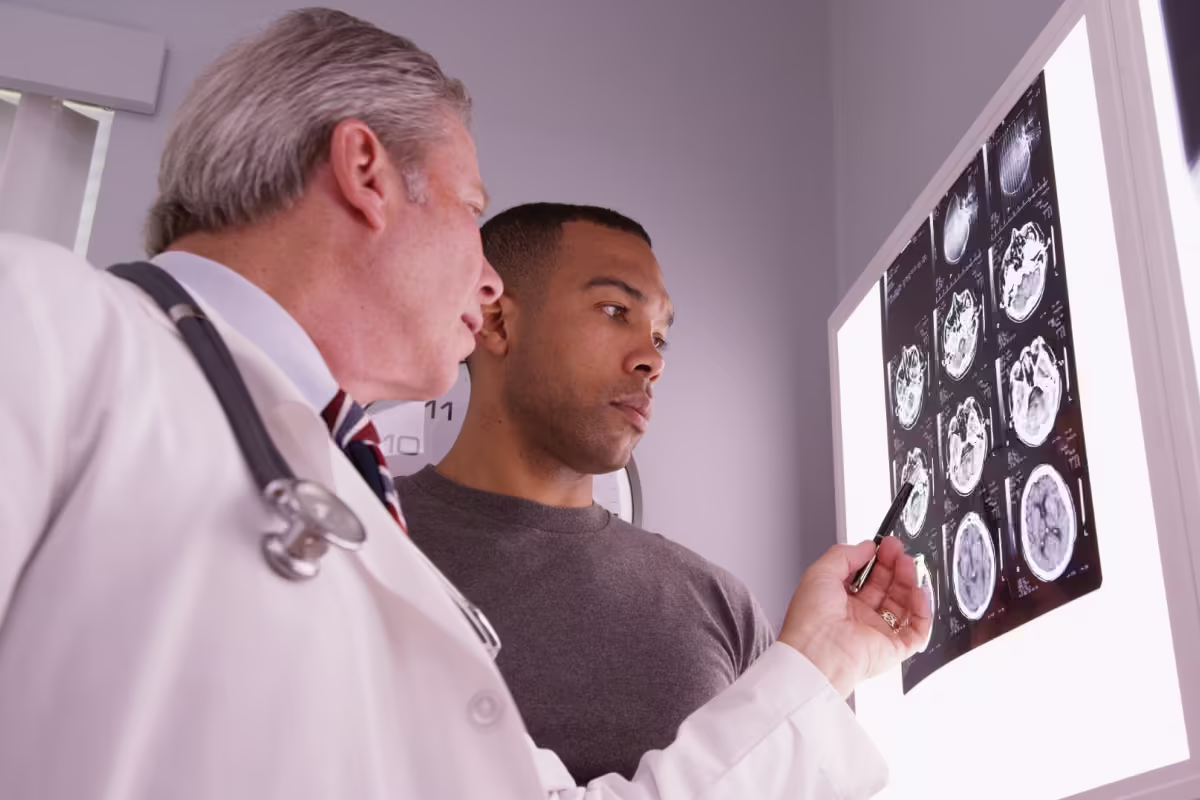
In the weeks before surgery, the best brain surgeon in Los Angeles will likely order 3D imaging with a CT or MRI scan to map the exact location of your tumor, along with blood tests that check for clotting problems, infection, kidney function, and salt levels. In some cases, an angiogram may also be ordered to create detailed images of the blood vessels around the tumor. The night before surgery, you will be asked to stop eating and drinking. You may also have to stop certain medications or supplements for a day or two before surgery.
What Happens During Meningioma Surgery
When it is time for surgery, you will be given general anesthesia, which means you will be fully asleep and will not feel anything. The most common approach to meningioma removal is a craniotomy, where the best brain surgeon in Los Angeles removes a small section of the skull to reach the tumor, takes out as much of the tumor as safely possible, then replaces that section of bone and secures it with titanium plates and screws.
For tumors located at the skull base that can be reached through the nose, a minimally invasive endoscopic approach can be used by threading a small camera through the nasal passages to remove the tumor without opening the skull at all.
How long surgery takes depends heavily on the tumor's size and location. Smaller tumors in accessible areas may take two to three hours, while complex cases near critical blood vessels or nerves can take considerably longer.
What to Expect After Meningioma Surgery
Most patients spend the first night in the intensive care unit, where nurses monitor blood pressure, breathing, and neurological function closely, before being moved to a regular hospital floor in the days that follow. The total hospital stay after meningioma surgery typically ranges from a few days to a couple of weeks, depending on the size and location of the tumor and which surgical approach was used.
Headaches, fatigue, nausea, and soreness around the incision are all common in the days right after surgery, but most of these symptoms are manageable and improve steadily.
Meningioma Surgery Recovery
Coming home after brain surgery requires patience. Your body is undergoing significant healing, even on days when you feel okay. For the first week, you’ll want to keep your incision clean and dry, and not lift anything heavier than 10 pounds for at least four weeks. Some patients feel ready to return to work in as few as two to four weeks, while others, particularly those who had larger or more complex tumors, may need six to twelve weeks before resuming regular activities.
It is also common to notice some difficulty with memory, concentration, or multitasking in the weeks following surgery, especially if the tumor was near areas of the brain that handle cognitive function. These symptoms often improve with time, but should be discussed with the best brain surgeon in Los Angeles. Remember, rest is not laziness during this period.
Long-Term Outlook After Meningioma Surgery
Research shows that a small number of meningioma patients see their tumors return within 10 years, with higher-grade tumors carrying a significantly greater chance of recurrence. This is why regular follow-up MRI scans and ongoing checkups with the best brain surgeon in Los Angeles are a non-negotiable part of post-surgical care.
Patients with Grade II or III tumors may need radiation therapy starting within a few weeks of surgery, while those with Grade I tumors are often monitored with imaging alone unless the tumor shows signs of growing back.
The overall outlook for meningioma patients is encouraging. The five-year survival rate for benign meningiomas ranges from 87% to 95%, depending on age, and many patients go on to live full, active lives for decades after treatment.
Where to Find the Best Meningioma Surgeon in Los Angeles
A meningioma diagnosis can feel unsettling, but surgery does not have to add to this stress. Choosing the right surgeon is the most important decision you will make in this process. A decision that makes the difference between proceeding with confidence or uncertainty.
As the best brain surgeon in Los Angeles, Dr. Benet has dedicated his career to the most complex cases in neurosurgery, and meningioma removal is at the center of that work. He brings together advanced surgical techniques, precise pre-operative planning, and a care team that treats your case as the individual situation it is.
Ready to get an accurate diagnosis and effective treatment from the best meningioma surgeon in Los Angeles?





.svg)


.svg)
.svg)