The signs of spinal stenosis start so subtly that many people don’t even notice at first. Things like leg pain during your evening walk or standing in line at the grocery store are easily brushed off. At first, sitting down brings relief, but as time goes on, this relief becomes more and more temporary. As spinal stenosis progresses and starts compressing the nerves in your spine, these symptoms can interfere more with daily life. For about 25% of people with spinal stenosis, surgery is the best treatment option.
If you fall into this category, you’re likely wondering how to prepare for spinal stenosis surgery and what to expect during and after your procedure. Read on to learn about the minimally invasive techniques used today for spinal stenosis, how to prepare yourself and your home for recovery, and where to find the best spine surgeon in Los Angeles to guide your treatment.
What Does Spinal Stenosis Surgery Involve?
Spinal stenosis surgery typically involves decompression, a procedure that removes or reshapes bone, ligament, or other tissue that is pressing on spinal nerves. Recovery varies slightly depending on your surgeon's approach and your health. However, many patients begin walking soon after surgery.
How to Know When Spinal Stenosis Requires Surgery
Surgery is usually considered when spinal stenosis causes significant symptoms that have not improved enough with nonsurgical treatment, or when neurological problems are progressing. Typical symptoms of progressing spinal stenosis include:
- Leg pain
- Numbness
- Tingling
- Weakness
- Neurogenic claudication, which is pain or heaviness in the legs that develops with standing or walking and improves with sitting or bending forward
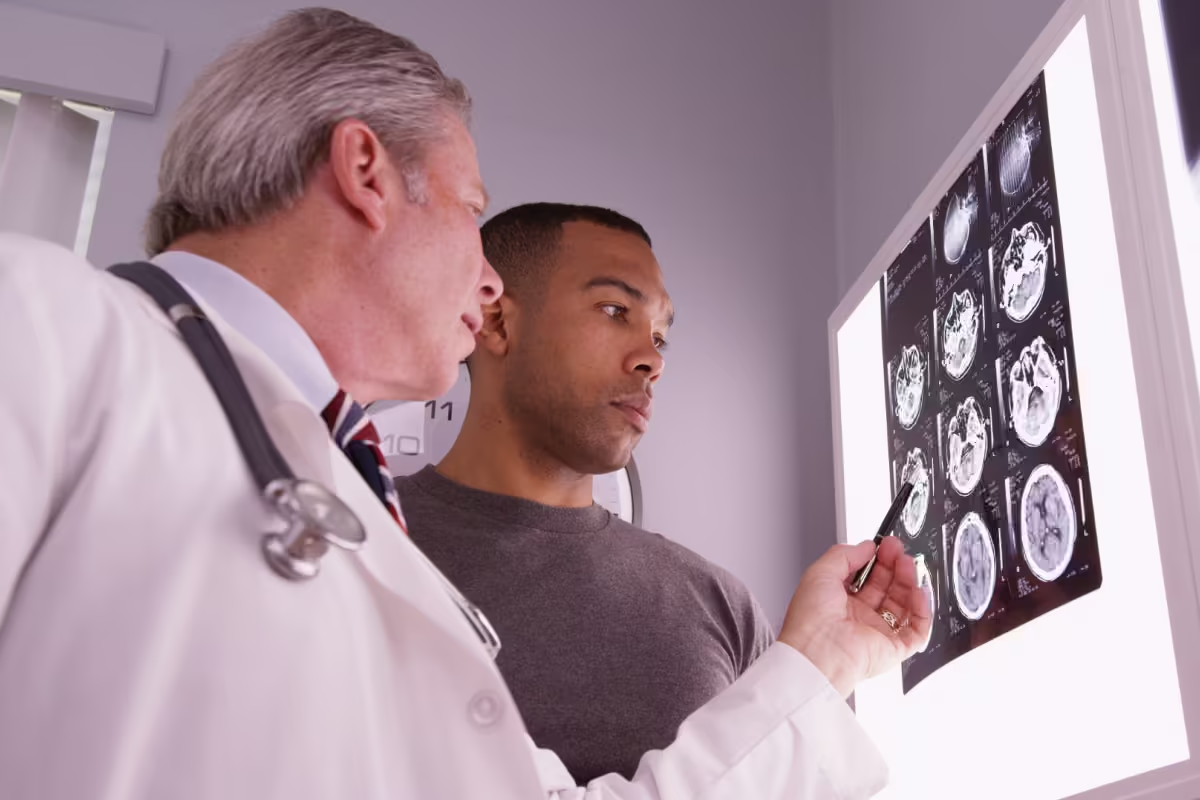
Before surgery, an MRI is usually necessary. This imaging can show how severe the narrow spinal canal is and can also guide the surgeon in choosing the most appropriate surgical technique.
For someone with new or mild symptoms, initial treatment may include physical therapy, activity modification, medications, or injections. If these measures provide inadequate relief and walking or daily activities remain limited, the best spine surgeon in Los Angeles will often recommend surgery as the next step.
What Happens During Spinal Stenosis Surgery?
The main goal is to decompress the affected spinal nerves. During surgery, the surgeon creates more space around the affected nerve by removing or reshaping the structures causing the pressure.
Depending on the location and cause of the stenosis, this may involve a laminectomy or laminotomy:
- A laminectomy removes part of the lamina, the bony structure forming the back of the spinal canal.
- A laminotomy removes a smaller portion of bone to create an opening while preserving more of the surrounding anatomy.
The surgeon may also remove thickened ligament or bone from arthritic joints when these structures contribute to nerve compression. Minimally invasive techniques can be used in certain cases to help reduce tissue disruption, blood loss, and hospital stay.
Do You Need a Fusion With Spinal Stenosis Surgery?
Spinal decompression and spinal fusion are different procedures, and having spinal stenosis does not automatically require both.
- Decompression addresses pressure on the nerves. Fusion stabilizes two or more vertebrae when instability or another structural problem requires it.
- Fusion may be needed when spinal stenosis occurs alongside conditions such as significant instability, certain forms of spondylolisthesis, or spinal deformity.
What to Expect When Recovering From Spinal Stenosis Surgery
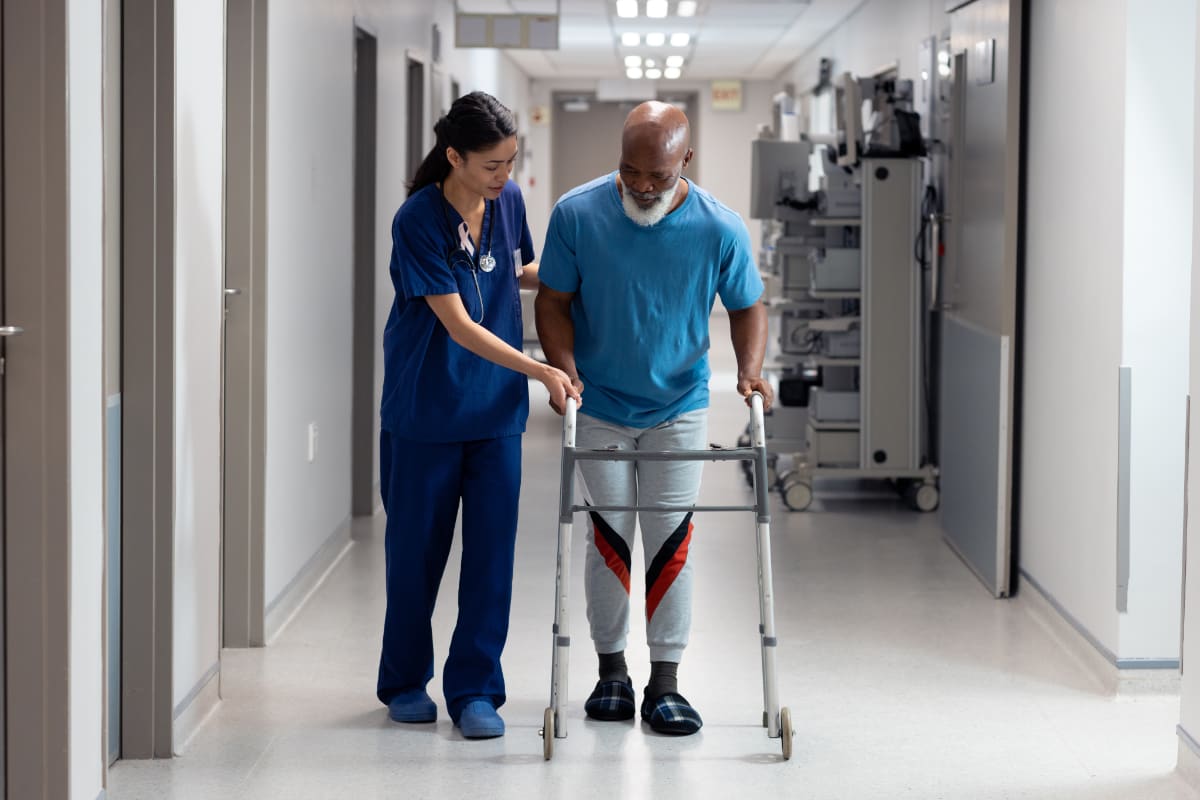
Most patients are encouraged to walk shortly after surgery. Early walking helps restore mobility and reduces some risks associated with prolonged bed rest. Your surgeon will provide specific instructions about lifting, bending, driving, exercise, and returning to work. While every surgery and recovery is different, here’s what you can generally expect:
- First few days: Walking increases gradually, while incision soreness and fatigue are common.
- First several weeks: Daily activity typically increases, with restrictions based on the operation performed.
- Several weeks to months: Strength, endurance, and function continue to improve. Physical therapy may be recommended.
- Long-term: Most patients gradually return to their normal activities, although recovery can take longer when nerves have been compressed for an extended period.
Leg pain caused by nerve compression can improve relatively quickly. Numbness and weakness, however, can take longer because nerves recover slowly.
Where to Find the Best Spinal Stenosis Surgeon in Los Angeles
Spinal stenosis surgery is a serious procedure that can offer effective relief. But that relief starts with choosing the right surgeon.
California Neurosurgical Specialists offers a patient-centered approach grounded in thorough assessments and personalized treatment. Dr. Arnau Benet, MD, PhD, leads our team as a globally recognized cerebrovascular neurosurgeon with extensive international training and expertise in complex brain, spine, and vascular conditions. His background includes advanced training at UCSF and the Barrow Neurological Institute, fellowship training in cerebrovascular and skull base surgery in Japan, and academic appointments as an assistant professor of neurosurgery at UCSF and adjunct professor at Barrow.
Ready to get effective treatment for spinal stenosis that is limiting your mobility or quality of life from the best spinal stenosis surgeon in Los Angeles?




.svg)


.svg)
.svg)